

Van life is supposed to feel freeing.
And a lot of the time, it is.
But there were also days where I felt more anxious, more overwhelmed, and honestly more alone than I ever did sitting at a desk job.
That part? No one really talks about it.
When you’re constantly moving, living in a small space, and spending long stretches of time alone, things start to surface—whether you want them to or not. And while van life can absolutely be one of the most rewarding experiences, it can also be surprisingly taxing on your mental health.
So if you’ve ever found yourself feeling off, lonely, or even a little disappointed while living on the road… you’re not alone.
Why Van Life Can Be Hard on Your Mental Health
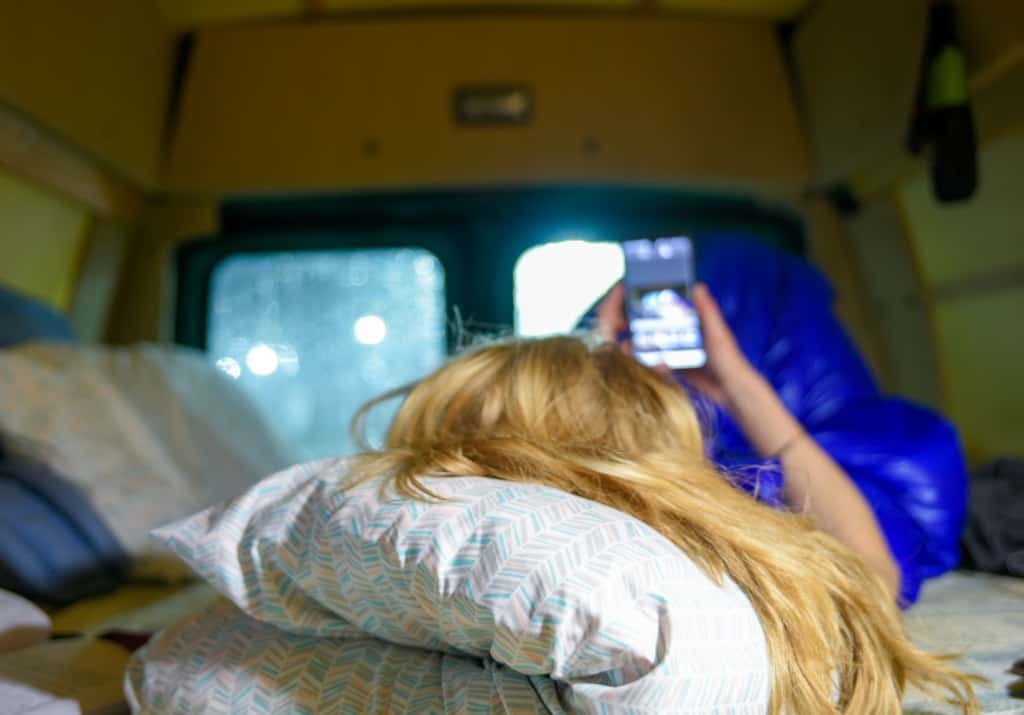
After months (or years) of dreaming about van life, you finally make it happen.
No office. No schedule. No obligations. Just you, your van, and the open road.
Complete freedom.
And also… a lot of solitude.
The reality is, van life doesn’t remove the normal ups and downs of life—it just changes the setting. You’re still going to have off days. You’re still going to feel stressed sometimes. The difference is, now you’re dealing with those emotions in a tiny space, often by yourself, without the same routines or support systems you’re used to.
Some days are incredible.
Other days, you’re stressed about money, trying to find a place to park, or just feeling weirdly off for no clear reason.
And that’s normal.
Van Life Doesn’t Fix Your Problems

There’s a saying that goes, “Wherever you go, there you are.”
I didn’t fully understand that until I was living it.
If anything, van life has a way of amplifying what’s already going on internally. Without the usual distractions—work, social events, busy schedules—you’re left with your thoughts a lot more than you might be used to.
And for me, that’s actually what led me to start exploring things like personal growth content in the first place.
There were times I found myself turning to different tools just to feel more grounded—whether that was journaling, changing my routine, or even diving into platforms like Mindvalley (I recently shared a full breakdown of my experience in my Mindvalley review).
Not because I was trying to “optimize” my life… but because I was trying to feel okay again.
Van life didn’t create those feelings—but it definitely gave them more space to exist.
What Actually Helped Me (When Things Felt Off)

I’m not big on rigid “tips,” but there were a few things that genuinely made a difference for me when I started feeling anxious or out of sync on the road.
1. Adjusting expectations (this isn’t a vacation)
There’s this idea that every day of van life is going to feel magical, and sometimes it sure does.
But this isn’t a one-week road trip—it’s your life.
Some days you’ll wake up on the wrong side of the bed. Some days you’ll feel unmotivated. Some days you’ll spend the entire day in your van watching Parks and Rec reruns… even if the Grand Canyon is right outside.
That doesn’t make you ungrateful. It makes you human.
2. Prioritizing movement (even when it’s inconvenient)
Getting in a solid workout while living in a van isn’t always easy.
Check out my Ladder Fitness App review to see how I spend just 30-45 minutes a day getting a light workout in.
You’re not exactly setting up a squat rack in a Sprinter.
But I noticed a huge difference in my mood when I made some kind of movement a priority—whether that was hiking, doing bodyweight workouts, or just getting outside.
I had to let go of what my workouts “should” look like and get creative with what was actually realistic in that environment.
(And if you’re curious, I’ve shared some of the travel-friendly workout gear that made this easier.)
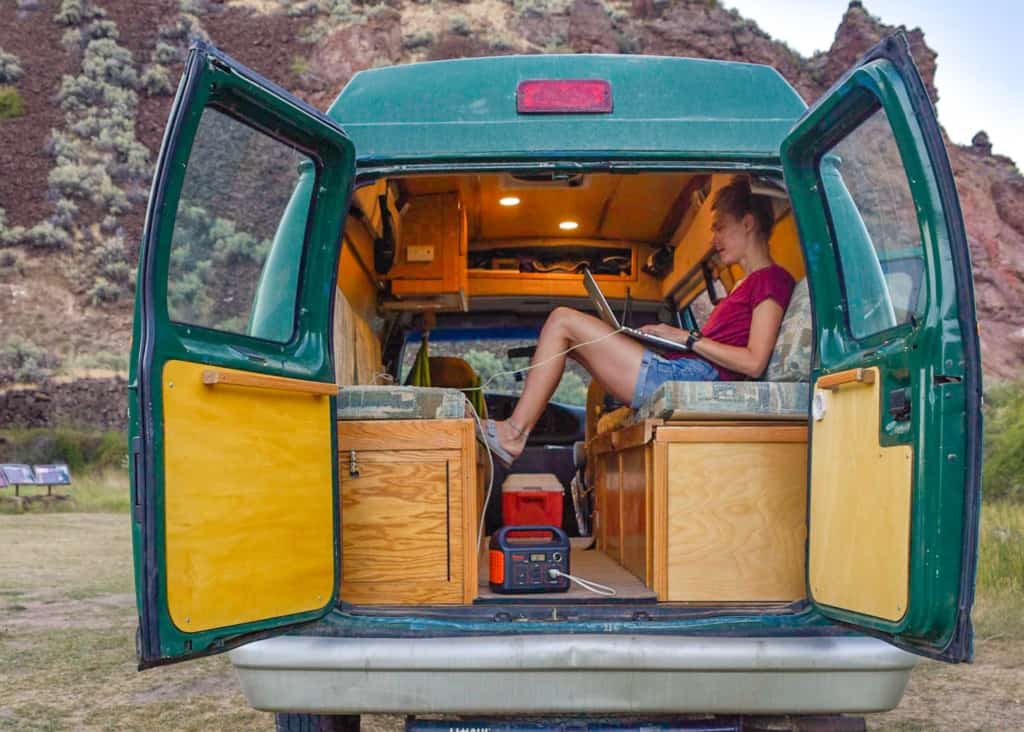
3. Doing one small productive thing a day
I realized pretty quickly that I need some level of productivity to feel sane, even if it’s small.
Cleaning something. Fixing something. Organizing a drawer. Answering emails.
Van life gives you plenty of things to do—but it can also feel overwhelming if you think about everything at once.
So I started focusing on just one thing per day.
That was enough to feel grounded.
4. Having some form of work or structure
I know… this one sounds counterintuitive.
A lot of people get into van life to escape work.
But for me, having something to anchor my time—especially remote work—made a huge difference in my mental health.
When I left my corporate job, the freedom felt amazing… until I realized I was spending money without making any.
That stress builds fast.
Finding remote work (even part-time or freelance) helped create a sense of stability again—and honestly gave me something to focus on outside of just “existing” on the road.
5. Breaking up the solitude
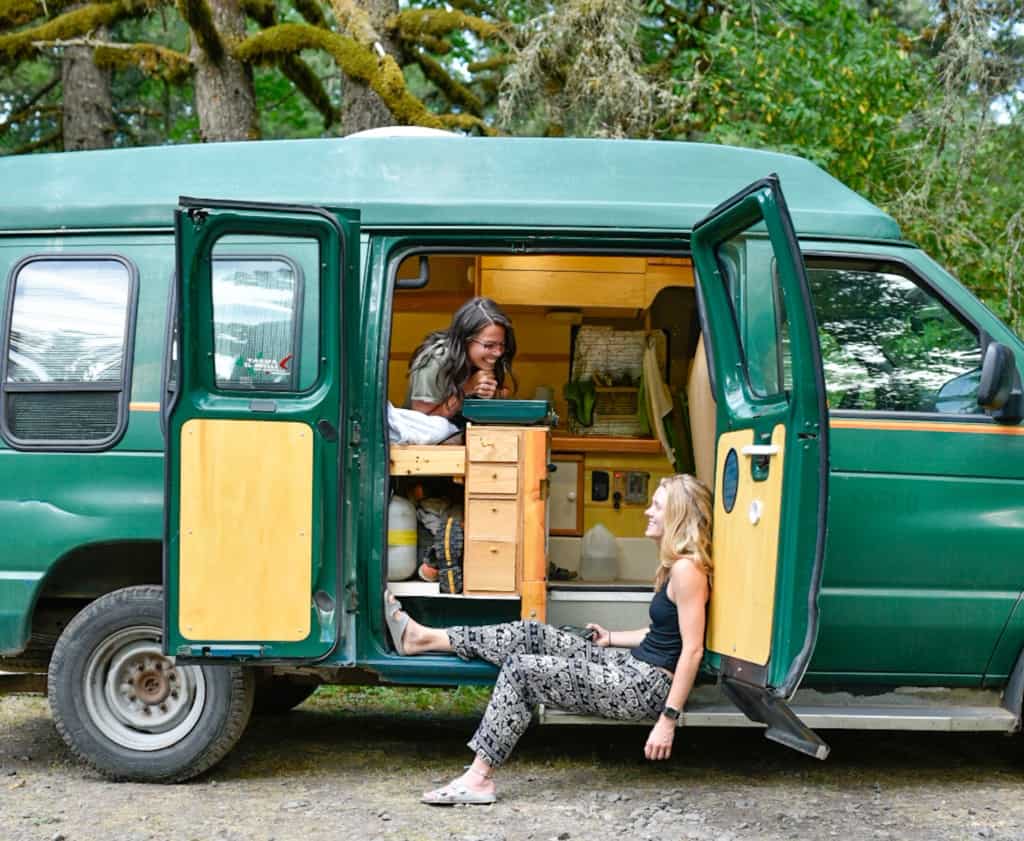
One of my favorite parts of van life ended up being meeting other people on the road—whether through apps, shared camp spots, or just running into people along the way. (I talk more about navigating this in my solo female van life experience, because it definitely adds another layer to the whole thing.)
I also loved the balance of it: spending time with people during the day, then having my own space to come back to. Van life gatherings were actually one of the easiest ways to find that balance—I shared more about what those are like and how to find them in my van life gatherings guide.
And sometimes, even just having a friend or family member join for a week made a huge difference.
Remember that Van Life Won’t Solve Mental Health Issues
Giving yourself space to decompress and work through your own mental health can be very helpful. But the rigors of van life can also exacerbate existing issues, and can even shine a light on problems you didn’t know were there.
There’s a saying that goes “Wherever you go, there you are.” If you’re looking at van life as a way of escaping your existing anxiety or depression, you should know that no matter how far you drive, those problems will follow you. Van life is not a solution for existing mental health issues, and if you are already struggling with anxiety, depression or other pressures, consider talking through them with a mental health professional before you leave.
A popular choice for road travelers is a mental support service called BetterHelp, where you can remotely connect with a therapist when needed.
You can also try out some meditation, energy-healing type apps like Mindvalley. Check out my full Mindvalley review.
*************
Taking care of your mental health is an important and often overlooked part of the van life experience. Ultimately, your mind is as important as your van’s engine or tires – if it’s in bad shape, nothing else on the trip is going to go well. Taking a few simple steps to keep your mental health in good shape can mean the difference between a difficult, challenging slog and a long and satisfying adventure.
Save This On Pinterest